INDEPENDENT PERSPECTIVES. SHARED POSSIBILITIES.Our purpose ↗
BLACKTEXAS.ORGTexas roots. American possibilities.
Explore topics ⌕Subscribe ↗
Menu
COVERAGE / HISTORY & HERITAGE

Remember deeply. Look forward.

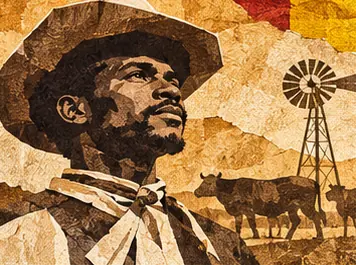
AI-generated editorial artwork

Study Black history through archives, oral histories, family records, historic places, and community memory.

Texas history · Frequently asked questions

What role did slavery play at the Alamo, and what did Juneteenth mean for Black Texans?

The people enslaved in Texas did not spend two and a half years waiting for a message to arrive. They lived under people who had the power, the financial incentive, and the determination to keep them enslaved. Some enslavers withheld the news even after the U.S. Army issued its order in Galveston. The difference between hearing about freedom and being able to claim it is central to this history.

I would describe Texas as a last Confederate stronghold of slavery. Slavery remained legal in the Union states of Kentucky and Delaware after June 19, 1865, because the Emancipation Proclamation applied to places in rebellion. The Thirteenth Amendment ended legal chattel slavery nationwide that December. What makes Juneteenth distinctive is that Black Texans made the day federal emancipation was announced in Galveston into a freedom anniversary, and their families carried that tradition across the country.

Before the Alamo, an Afro-Mexican president challenged slavery

The leader was Vicente Guerrero, an independence fighter whom Mexico’s National Human Rights Commission identifies as the country’s first Afro-Mexican president. On September 15, 1829, he issued an abolition decree. Its reach was Mexican territory, which then included Texas. The man who commanded Mexico’s army at the Alamo seven years later was Antonio López de Santa Anna. Keeping those two men distinct helps explain what happened between abolition and revolution.

Mexico had encouraged settlement in its northern territory. Many settlers from the American South brought enslaved Black people with them and wanted to grow cotton under the same labor system they knew at home. When Mexican authorities restricted slavery, some settlers used long-term labor contracts to keep people in bondage. Guerrero’s decree posed a direct threat to that arrangement. Officials intervened on the settlers’ behalf, and Texas obtained an exemption in December 1829. That exemption matters. Six years before the revolution, slaveholders in Texas already had experience pressing a government to protect their claims over other human beings.

What were people fighting for at the Alamo?

In San Antonio in 1836, several conflicts converged. Santa Anna had dismantled Mexico’s federal system and concentrated power in the central government. Mexican federalists resisted him, including Tejanos who wanted to restore the Constitution of 1824. Anglo settlers also had disputes with Mexico over immigration, trade, and local government. For slaveholders, independence offered something especially valuable: the power to write slavery into the law themselves. These interests could bring people into the same rebellion for different reasons. The defenders included Tejanos, and opposition to Santa Anna extended well beyond Texas.

The sequence tells the story. While the Alamo was under siege, delegates meeting at Washington-on-the-Brazos declared Texas independent on March 2, 1836. Santa Anna’s troops took the Alamo on March 6. Later that same month, the new republic adopted a constitution whose General Provisions, Section 9, protected slaveholders’ ability to bring enslaved people into Texas, denied Congress the power to emancipate them, and required the consent of Congress for a free person of African descent to live permanently in the republic. That document gives us firmer ground than guessing what every defender privately believed. Whatever brought individual men to the Alamo, the republic their rebellion produced made slavery a constitutional commitment.

A Black man inside the Alamo saw a different fight for freedom

His name was Joe. William Barret Travis, the Alamo commander, enslaved him. According to the Handbook of Texas, Joe took up a gun during the assault, survived, and later gave an account of the battle. Afterward, Travis’s estate continued to claim him as property. In 1837, Joe escaped. The executor offered $50 for his capture.

For a San Antonio reader, Joe changes the question. When someone says the men at the Alamo “fought for freedom,” whose freedom do they mean? Joe had been inside the fortress. He had survived the assault. Yet Texas independence left him enslaved. To secure his own liberty, he had to leave the people who claimed to own him. And for other enslaved Texans in the decades that followed, the route to freedom ran south into Mexico. The National Park Service documents people who took that route, reversing the direction many Americans instinctively associate with escape from slavery.

From the Alamo to Juneteenth

Texas joined the United States in 1845. By 1860, the census counted 182,566 enslaved people in Texas, more than 30 percent of the state’s population. And when Texas secession delegates explained in 1861 why they wanted to leave the United States, they explicitly defended African slavery and rejected racial equality. Here the political leadership left its reasoning in its own words.

On June 19, 1865, Union General Gordon Granger issued General Order No. 3 in Galveston. It declared that “all slaves are free.” But read farther down: the same order advised freed people to stay where they were and work for wages. Within one document you can see both the magnitude of the change and the struggle already underway over who would control Black labor afterward.

That’s why I’d give Black Texans themselves the last word in how this story is told. Texas slaveholders fought to preserve bondage. Black Texans chose to commemorate freedom. In 1872, formerly enslaved Houstonians, with leaders including Reverend Jack Yates, pooled their money to buy ten acres for Juneteenth gatherings. That land became Emancipation Park. Families who had once been treated as property bought property together so their children would have a place to remember. That is part of what the celebration means, too.

Read the historical records

Black Texans from emancipation to the early 2000s

In Houston, families bought land to celebrate freedom. In Galveston, a father entered national politics and his daughter preserved songs. Follow their stories and the Texans who came after them.

1872 · Faith and community

Jack Yates and the founders of Emancipation Park

On June 19, 1865, a Union general announced freedom for enslaved Texans in Galveston. Seven years later, formerly enslaved Houstonians, including Jack Yates, the first pastor of Antioch Missionary Baptist Church, pooled their money to buy ten acres where Black families could celebrate Juneteenth together. That land became Emancipation Park.

Emancipation Park history ↗
1886 · Politics

Norris Wright Cuney

Born near Hempstead, Cuney built a political career in Galveston. In 1886 he became Texas’s representative on the Republican National Committee, giving a Black Texan a voice in national party decisions as voting rights came under attack.

Handbook of Texas ↗
1903–04 · Music and education

Maud Cuney-Hare

Cuney’s daughter took a different path. A Galveston pianist, she taught music at what is now Prairie View A&M University. She later traveled through the Caribbean collecting songs and brought Creole music to wider attention through her research.

Handbook of Texas ↗
1970s · Government and constitutional law

Barbara Jordan

Houston voters elected Jordan to Congress in 1972. In 1974, as the House Judiciary Committee debated impeaching President Richard Nixon, she explained on national television why Congress had a duty to examine the president’s conduct.

Explore the BlackTexas policy page ↗
1995 · Science and spaceflight

Bernard Harris Jr.

A physician who grew up in San Antonio, Harris became the first African American to walk in space. On the shuttle Discovery mission STS-63, he left the spacecraft to test equipment that astronauts would need to work outside in the cold.

NASA’s spacewalk account ↗
2008–09 · History and literature

Annette Gordon-Reed

Raised in Conroe, Gordon-Reed reconstructed the lives of several generations of the Hemings family, whom Thomas Jefferson enslaved at Monticello. Her 2008 book, The Hemingses of Monticello, won the 2009 Pulitzer Prize in History.

Harvard’s account of the award ↗

Black Texans in the civil rights movement

In San Antonio, church members and families challenged segregation at the counter. In Houston, students sat down at a grocery store while precinct workers turned out voters. Across Texas, local people chose the targets, recruited their neighbors, and bore the cost when officials resisted.

San Antonio: from the East Side to the lunch counter

San Antonio · Churches and public accommodations

Rev. Claude W. Black Jr.

After becoming pastor of Mount Zion First Baptist Church in 1949, Black joined residents in peaceful protests over where Black San Antonians could eat, see a movie, and use public parks. Joske’s department store was one target. Downtown lunch counters began integrating in March 1960, but access still depended on the establishment. In his oral history, Black recalled the work behind a transition often remembered as quiet.

Claude and ZerNona Black papers · Black’s oral history · See the March 1960 photographs

San Antonio · Black press and direct action

G. J. Sutton and the Sutton family

Garlington Jerome Sutton helped found the newspaper Snap in 1949 with Eugene Coleman, Claude Black, and Bernard Adams. During the 1960s, members of the Sutton family took part in sit-ins at department stores and restaurants. Their efforts helped win a city anti-discrimination ordinance in 1965. By the time Sutton won a Texas House seat in 1972, his civil rights work had already reached from the East Side press to downtown lunch counters.

Texas Historical Commission marker research

Houston: the courthouse, the counter, and the ballot

1940s–1950s · Organizing and education

Lulu Belle Madison White and Heman Sweatt

White, a Houston NAACP organizer, asked for a volunteer to challenge segregation at the University of Texas law school. Sweatt, a Houston postal worker, stepped forward. In 1950 the Supreme Court ordered Texas to admit him.

Read how the case began ↗
1960 · Student sit-ins

Eldrewey Stearns

At Texas Southern University in Houston, Stearns helped organize students to challenge segregated lunch counters. On March 4, students sat down at Weingarten’s grocery in the Third Ward and asked to be served.

Explore the Houston organizing effort ↗
Houston · Precinct organizing

Barbara Jordan

In 1960, Jordan helped manage voter turnout for John F. Kennedy’s campaign across 40 Black precincts in Houston. She lost two Texas House races before winning a Texas Senate seat in 1966 after redistricting. The precinct work is an important part of her civil rights record: years before national audiences heard her speak in Congress, she was helping neighbors exercise the franchise in Houston.

U.S. House biography · Barbara Jordan tribute

Dallas, El Paso, and Marshall: young people challenge segregation

1940s–1960s · Youth organizing

Juanita Craft

Born in Round Rock and based in Dallas, Craft helped build NAACP branches across Texas. She worked with young people in Dallas to challenge segregated admission at the State Fair of Texas.

Read Craft’s story ↗
El Paso · College access

Thelma Joyce White

Douglass High School’s 1954 valedictorian applied to nearby Texas Western College and was turned away because she was Black. She studied in New Mexico while her attorneys challenged the exclusion. In July 1955 a federal judge barred the university from denying admission on racial grounds. White continued her studies in New Mexico; twelve Black students enrolled at Texas Western that fall.

Read White’s biography

Marshall · Student sit-ins

The students of Wiley and Bishop colleges

In 1960, students from Marshall’s two Black colleges challenged segregation at Woolworth’s and Fry Hodge Drug Store. Police arrested protesters, and the downtown counters closed rather than serve them. Their campaign shows the risks students took and why the outcome could differ sharply from one Texas city to another.

Read the April 1960 reporting · Texas Historical Commission account

The wider movement: voting rights and interstate travel

1920s–1930s · Voting rights

Lawrence A. Nixon

El Paso election officials turned Nixon, a Black physician, away from a Democratic primary. He challenged the exclusion twice in the U.S. Supreme Court and won both times. Party officials kept finding new ways to bar Black voters.

Read Nixon’s story ↗
1944 · Voting rights

Lonnie E. Smith

A Houston dentist took the next fight to the Supreme Court after he was denied a primary ballot. In Smith v. Allwright, the Court struck down the Texas Democratic Party’s whites-only primary, opening a route to the ballot across the South.

Read Smith’s story ↗
1961 · Freedom Rides

James Farmer Jr.

Born in Marshall and educated at Wiley College, Farmer helped found the Congress of Racial Equality. He led the 1961 Freedom Rides to test whether interstate bus carriers and terminals would honor federal desegregation rulings.

Read Farmer’s story ↗

Two Texas ties on the 1968 Olympic podium

Before Tommie Smith raised his fist in Mexico City, the Clarksville-born sprinter had just run 200 meters in 19.83 seconds, a world record. Beside him stood bronze medalist John Carlos. A year earlier Carlos had raced for East Texas State University in Commerce, where he set five school records and helped his team win the Lone Star Conference championship. U.S. Olympic & Paralympic Museum · East Texas A&M Athletics

At the medal ceremony on October 16, 1968, Smith and Carlos bowed their heads during the U.S. anthem. Each raised a black-gloved fist. They stood shoeless in black socks to draw attention to Black poverty. Olympic officials suspended the two Americans and sent them home. Years later, Carlos recorded an oral history in Commerce about his season there and his activism. Smithsonian’s account of the protest · John Carlos’s oral history

Was Emily Morgan a spy at San Jacinto?

The evidence distinguishes three kinds of wartime experience: captivity, military intelligence, and diplomacy.

San Jacinto · A civilian’s experience

Emily D. West

A free Black woman from Connecticut, West came to Texas to work for James Morgan. Mexican troops captured her in April 1836. The story that she deliberately distracted Santa Anna rests on hearsay recorded six years later. Her passport request has a firmer place in the record. Having lost her freedom papers at the battleground, she sought documentation to return home in 1837. No reliable record establishes a spy assignment.

The evidence for West’s story

San Antonio · Military intelligence

Hendrick Arnold

For a documented Black guide and spy of the Texas Revolution, follow the account of Hendrick Arnold, who guided a division at Béxar in 1835.

Read Arnold’s story

Nacogdoches · Wartime diplomacy

William Goyens

Goyens, a free Black blacksmith, wagonmaker, and freight hauler, served as an interpreter and intermediary in negotiations with Cherokee leaders. His Texas business career also predates the founding of Wilson Pottery in 1869.

Handbook of Texas biography · Wilson Pottery in Capote

The Black press in Texas

Richard Nelson and the Black press

On May 22, 1871, Nelson published the first issue of The Representative in Galveston. He owned the paper, edited it, and served as its publisher. The Texas Association of African American Chambers of Commerce honors his legacy through its Richard Nelson Award for media and communications. In 2025 the chamber’s program named Thurman Jones of the North Dallas Gazette as the award recipient.

Richard Nelson’s biography · 2025 awards program

History & heritage checklist

  1. Record where an account or document came from.

  2. Compare oral history with other records without erasing its perspective.

  3. Distinguish documented facts, interpretation, and unanswered questions.

Related topics

All topics →
TEXAS IS OUR HOME BASENews & subscriptions: BlackTexasNews.com ↗Authority partner: BlackWealthIntelligence.com ↗Statewide chamber anchor: TAAACC.org ↗